Wheel ET, width and backspacing
Understanding Wheel Offset (ET)
Wheel offset is one of the most important wheel dimensions, yet it is often misunderstood. Choosing the correct offset affects not only how your wheels look, but also how they fit within the arches, clear suspension components, and influence steering feel.
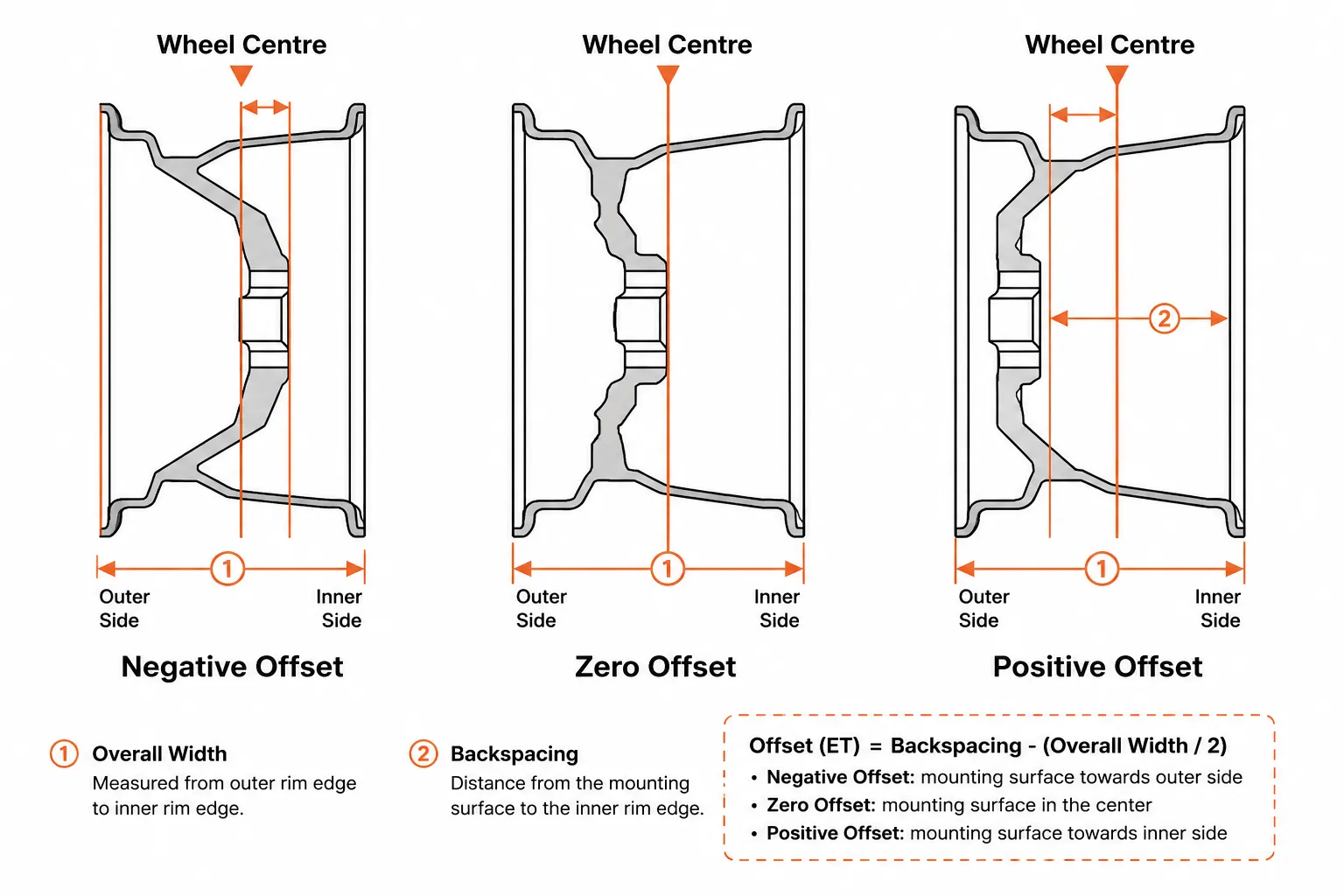
Offset, commonly shown as ET, is the distance between the wheel’s mounting face and the centreline of the wheel. It is measured in millimetres and can be either positive, zero, or negative.
Positive Offset
Positive offset is found on the vast majority of modern road cars. With a positive offset wheel, the mounting face sits further towards the outside of the wheel, moving more of the wheel’s width towards the suspension side of the car.
For example, an ET25 wheel has its mounting face positioned 25 mm outward from the wheel’s centreline. Most BMW models use positive offsets, although the exact value varies between chassis generations.
Higher positive offsets generally pull the wheel further inside the arch.
Zero Offset
A zero offset wheel has its mounting face positioned exactly on the wheel’s centreline.
If you were to draw a line through the middle of the wheel’s width, the mounting face would sit directly on that line. Zero offset wheels are relatively uncommon on BMW road cars but are often seen on older motorsport and off-road applications.
Negative Offset
Negative offset places the mounting face further towards the inside of the wheel. This pushes the wheel outward and creates a deeper dish appearance.
Negative offsets are commonly associated with wide-body race cars, off-road vehicles and heavily modified builds with flared arches. While visually appealing, excessive negative offset can create clearance issues and place additional loads on wheel bearings and suspension components.
How to Measure Wheel Offset Yourself
If the offset marking is missing or unreadable, it can be measured using a straight edge and a ruler.
Place the wheel face down on a flat surface. A tyre can remain fitted as long as the wheel sits level.
Step 1 – Measure Overall Width
Place a straight edge across the rear of the wheel and measure from the ground to the straight edge through the centre bore.
For example:
- Total wheel width = 300 mm
Divide this number by two:
- Wheel centreline = 150 mm
Step 2 – Measure Backspacing
Keeping the straight edge in place, measure from the mounting face up to the straight edge.
For example:
- Backspacing = 175 mm
Step 3 – Calculate Offset
Subtract the wheel centreline measurement from the backspacing measurement.
Example:
- Backspacing = 175 mm
- Centreline = 150 mm
Result:
- Offset = +25 mm (ET25)
Other examples:
- Backspacing = 150 mm → ET0 (Zero Offset)
- Backspacing = 125 mm → ET-25 (Negative Offset)
Where to Find the Offset Number
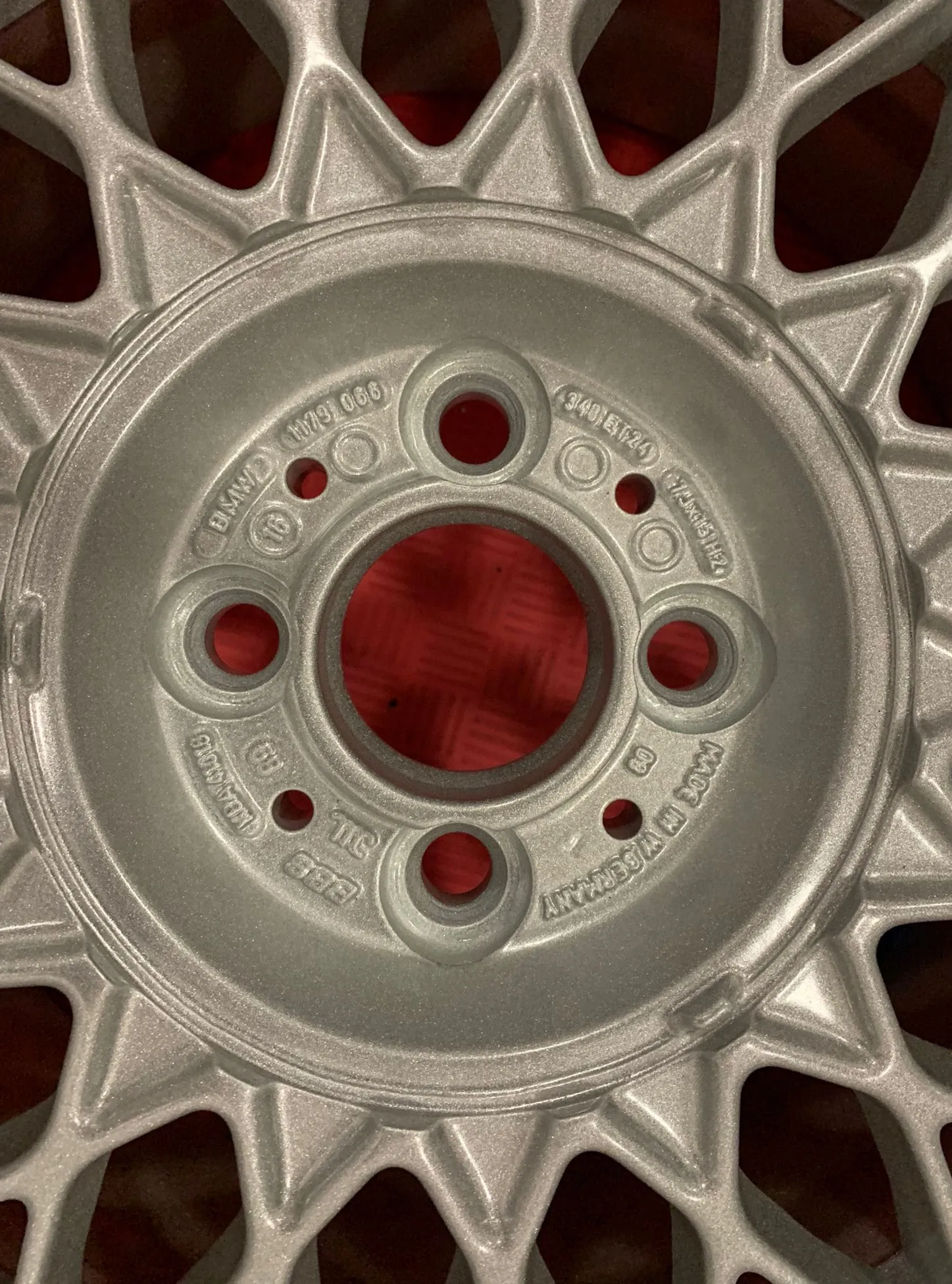
Most wheels have the offset value cast or stamped into the wheel itself. Look for markings such as:
- ET20
- ET25
- ET35
- ET47
Sometimes the marking may simply appear as “25P” or similar.
For example, a wheel marked ET25 has a positive offset of 25 mm.
Why Offset Matters
Changing offset affects wheel position relative to the suspension and bodywork.
A lower ET number moves the wheel outward:
- Wider track width
- More aggressive stance
- Increased risk of arch contact
A higher ET number moves the wheel inward:
- More suspension clearance required
- Increased risk of strut or spring interference
When selecting aftermarket wheels, always consider wheel width and offset together. Two wheels may have the same offset but sit very differently if their widths are different. A few millimetres can be the difference between a perfect fit and a wheel that rubs the suspension or bodywork.